Quick answer: To write your name in Morse code, translate each letter separately and place a space between its dot-and-dash pattern. For example, ANA becomes .- -. .-, and SAM becomes ... .- --. The code represents letters, not whole names, so it works for unfamiliar names as long as their written characters are supported.
Names are among the most meaningful things people choose to encode. A child's first name can become a craft project, a partner's initials can become an engraving, and a family name can form a secret clue. Morse is simple enough for anyone to try, but a small error can change the letters in a surprisingly personal message. This guide shows how to translate, check and present a name accurately.
Name in Morse Code: How the Conversion Works
The International Morse alphabet assigns a sequence of short and long marks to each letter. A is .-, N is -., and E is .. A name such as ANNE therefore becomes .- -. -. .. The two N letters appear consecutively but require a clear boundary; without it, their four marks could be interpreted differently.
Use the spelling the person actually prefers. If a name contains a middle initial, decide whether the initial should be separated by a normal letter space or shown as its own word group in a display. The encoding has no special symbols for capitalization, so "Anna" and "ANNA" produce identical Morse patterns.
For quick results, enter the name into the MorsePro.live text-to-Morse converter. To check it manually, compare every letter with the Morse Code Alphabet. The manual check is especially worthwhile if the result will be engraved or permanently printed.
Examples: First Names and Their Morse Patterns
Here are short examples that demonstrate how letter groups are assembled:
| Name | Morse code |
|---|---|
| ANA | .- -. .- |
| SAM | ... .- -- |
| LEO | .-.. . --- |
| MAY | -- .- -.-- |
| BEN | -... . -. |
| EVE | . ...- . |
Notice that the dot and dash patterns have different lengths. Morse was designed around a practical signal alphabet, not a fixed-width string of marks. A short name does not necessarily produce the shortest design; the exact combination of letters determines the number of marks, the audio duration and the physical space needed.
A useful exercise is to write the name in regular letters on one row, the Morse symbols beneath it, and an empty row below for decoding back. After conversion, cover the original name and see whether someone else can recover the spelling. If not, check letter spacing before assuming the alphabet entry is wrong.
How to Translate a Full Name and Initials
Two or more names need a clear word boundary. Written Morse often uses a slash between words, such as SAM / LEE. This is a notation for the longer silent gap, not an additional letter in the person's name. You can also show a wider blank space in an engraved design if the slash would be visually distracting.
Initials are a popular compromise when a complete name is too long. A name like "Maya Rose" can be represented by M and R, but those two letters do not spell the complete name. Make that design choice intentionally. Some people prefer to encode the first and last initial; others want the full written name hidden along a necklace or artwork.
If punctuation is included, such as a period after an initial, check whether the result encodes a literal period. A typed dot in text is not the same as the short signal mark in Morse notation: a period itself has its own multi-element Morse character. When a tool formats the output, it should preserve the difference between the source punctuation and the dots that form code.
What About Names with Accents or Non-Latin Letters?
International Morse has a standard Latin-letter core and a set of additional signs. A name written with characters outside a particular translator's supported alphabet may need transliteration, and different transliterations can produce different codes. For example, an accented letter should not be silently stripped or changed in a permanent design without the owner's approval.
Start by asking how the person wants the name written in Latin letters. Keep that chosen spelling as the source for the translation and save it alongside the code. For a multilingual keepsake, you might print the original name in its native script and the agreed Latin transliteration underneath before displaying its Morse pattern.
Do not assume one universal Romanization for Arabic, Mandarin Chinese, Hindi, Japanese or other writing systems. Names can have more than one accepted spelling. The right result is the version the person recognizes, not simply whichever spelling an automatic translator guesses first.
Turn a Name into Morse Code Audio
Names can be communicated through sound, light or tapping just like ordinary words. Use one short signal for each dot and a long signal, about three dot units, for each dash. Pause noticeably between letters. If the name contains repeated letters, those repeated patterns must still be separated clearly.
Listening to a name is a fun way to learn its code. Play it while watching the letters, then hide the visual version and try to recognize the rhythm. Short names are excellent beginner exercises because they are personally memorable. The Morse Code Practice tool can help you build recognition beyond the single name.
You can create a sound file with the Morse Code Generator if its format suits your project. Listen to the full file after exporting; problems with timing or audio clipping may not be obvious from the printed pattern alone. The same rule applies to recorded flashlight flashes or hand taps: test what the receiver will actually perceive.
Make a Morse Code Name Bracelet, Card or Tattoo
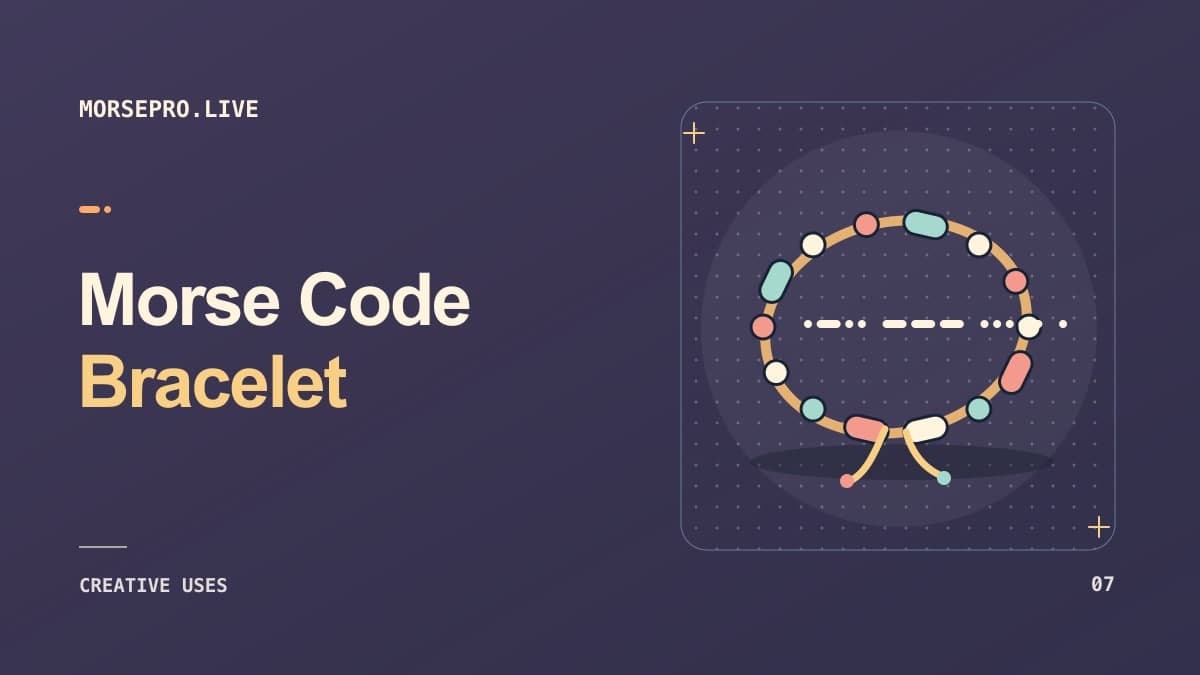
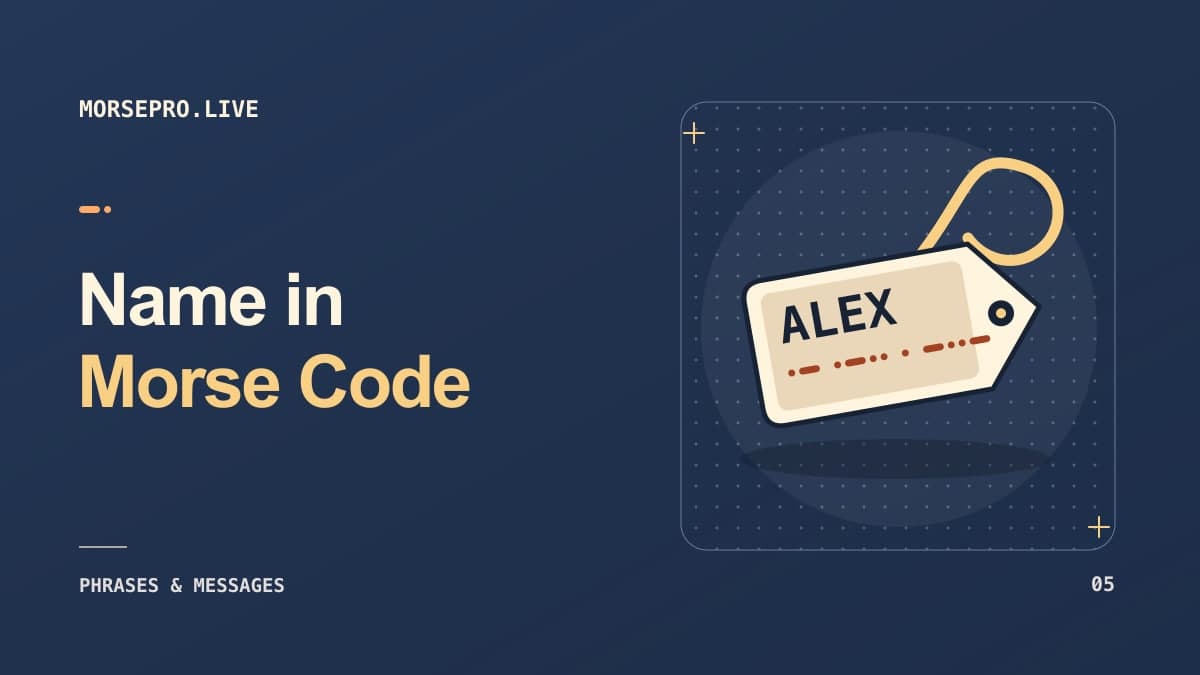
A name can look elegant as a minimalist line of round dots and longer bars. For a bracelet, consider one bead shape or color for dots and another for dashes. Use a distinct spacer between letters, because beads naturally bunch together during wear. For a gift tag, print the name's Morse code and add a mini decoding chart on the back.
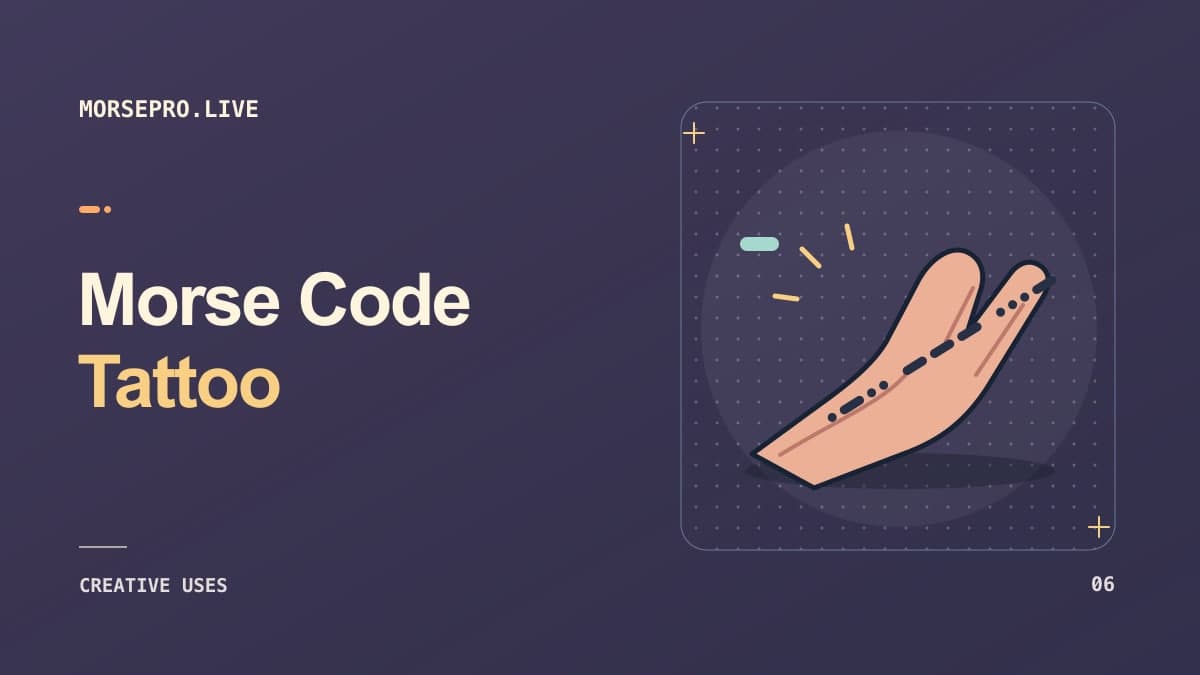
Tattoo designs need an extra verification step. Confirm spelling, direction of reading, and spacing with the person who will make the tattoo. A mirror-image transfer or compressed layout may unintentionally reverse or merge characters. Save a labeled proof with the original letters beneath the symbols and check the final stencil before any permanent work begins.
Longer surnames may not fit into a wrist-sized line without reducing gaps too much. A vertical arrangement or a two-line design may be clearer. If the design is intentionally private, remember that Morse is a code rather than encryption: anyone with the alphabet can still work out the name.
How to Check a Morse Name Before Sharing It
The safest check is a round trip. First encode the written name. Copy the result exactly, including spaces and word separators. Then paste that code into the Morse Code to Text Translator. The decoded result should match the intended spelling after accounting for capitalization.
If the reverse result differs, inspect the first wrong letter. Is its dot-dash order correct? Was a letter boundary removed? Did an unsupported symbol become a question mark? Work through those questions one character at a time. Do not fix the source by removing gaps until the tool happens to output something plausible; guessing creates more ambiguity.
This approach also works for initials, dates and short phrases. For a professional engraving or printed order, attach both the clear-text source and the code so the designer can independently verify the pattern. An extra minute spent checking matters more than squeezing an additional decorative mark into the final layout.
Frequently Asked Questions
How do I write my name in Morse code?
Translate each letter using the International Morse alphabet and separate the letter groups with spaces. A free translator can generate the pattern for you.
Do capital letters change Morse code?
No. Morse code does not encode capitalization, so the same letter pattern is used regardless of case.
Can I translate a name with spaces?
Yes. Keep an unmistakable word boundary between first and last names, often shown as / in written Morse.
Can names with accents be converted?
It depends on supported characters and chosen conventions. Agree on a spelling or transliteration before creating a permanent design.
How can I tell if my Morse name is correct?
Paste the encoded result into the Morse-to-text decoder and confirm the recovered letters.
Is a Morse name secret?
Only casually. It is easy for someone with a decoder to translate, so do not treat it as secure encryption.
For a personalized result, visit the free Morse Code Translator and enter the name you want to encode.