Quick answer: A Morse code bracelet spells a word or phrase using beads, bars or stones that represent dots and dashes. Its meaning depends on the actual message. A bracelet can encode a name, LOVE, an anniversary or a family word. To remain readable, it needs clear separators between letters and words.
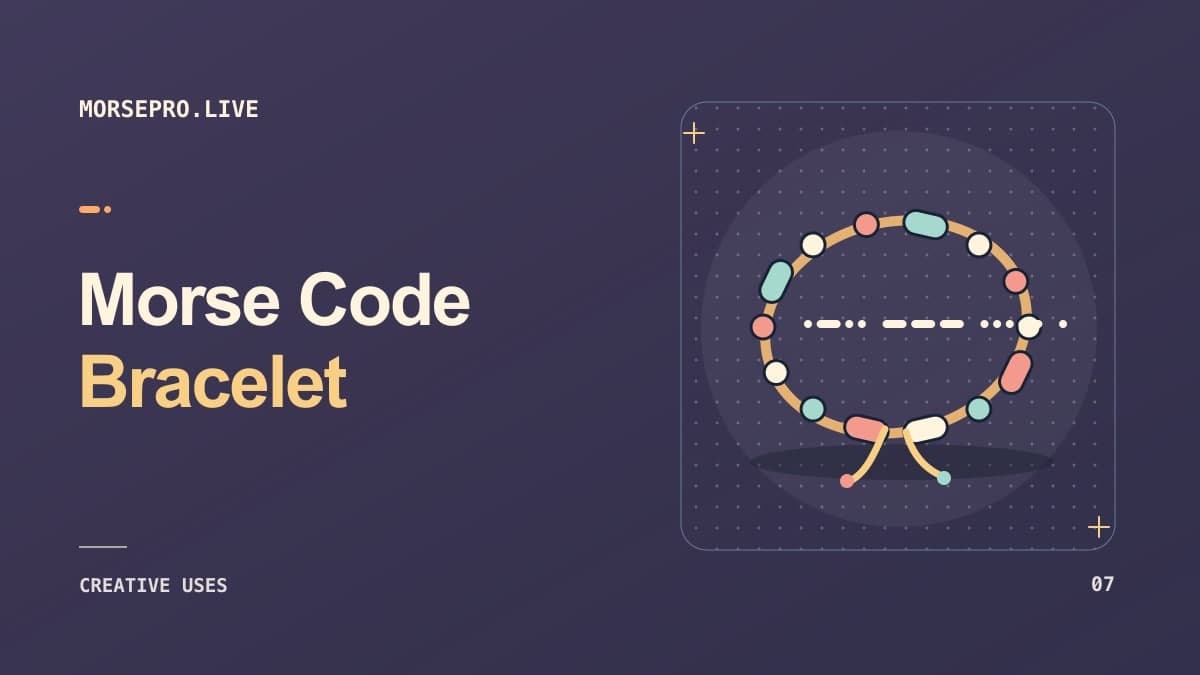
A beaded Morse bracelet makes a simple encoding system into something wearable. Round beads can stand for short signals, long tube beads for dashes, and a different color or small spacer for the gaps. That is enough to create a message you can carry every day. The satisfying part is not just the finished jewelry; it is the small puzzle of turning a meaningful word into a consistent pattern.
Morse Code Bracelet Meaning: What Do the Beads Say?
There is no single fixed meaning for a Morse bracelet. Two pieces with similar beads may spell completely different things. The meaning comes from the sequence of symbols and the person who chose the text. One bracelet might spell MOM, another HOPE, and a third might hide the initials of two friends.
A seller may advertise a "secret message bracelet" without displaying its translation. Before buying, ask for the exact words and a labeled diagram showing how the beads map to dots and dashes. Jewelry is sometimes arranged for style rather than strict readability, so you should not assume every decorative sequence follows standard International Morse.
For a personalized design, type your chosen word into the Morse Code Translator. Copy the dots and dashes exactly. The code can become a bracelet pattern regardless of whether the final piece uses wooden, glass, metal or plastic beads.
How to Make a Morse Code Bracelet Step by Step
Gather two clearly distinguishable bead types, a third spacer style if possible, flexible cord, scissors and a way to fasten the bracelet. Choose materials suitable for the wearer. Small beads can be a choking hazard for young children, and some metal findings may be unsuitable for people with sensitivities.
- Write the message in ordinary letters. Keep it short enough to fit the wrist.
- Translate the complete message using the alphabet chart or online translator.
- Assign a small round bead to each dot and a longer tube bead to each dash.
- Choose a small spacer between letters and a visibly different spacer for word boundaries.
- Lay all beads on a table before threading, with a written letter-by-letter pattern beside them.
- Thread the first letter, then its separator, and continue until the entire message is complete.
- Check the sequence before tying knots or closing the clasp.
- Wear it and see whether the word can still be decoded after the beads settle into place.
This activity also works well in a classroom. Participants can exchange bracelets and use a chart to recover their classmates' words. The National Inventors Hall of Fame has published a similar STEM activity that combines communication history and bead craft.
Morse Code Bracelet Ideas: Names, Love and Friendship
Short names and initials are natural bracelet messages because they are specific to the wearer. LOVE is .-.. --- ...- .; MOM is -- --- --; and HI is .... ... You can use a full name, but remember that the number of physical beads depends on the dots and dashes, not simply the number of letters.
For friendship bracelets, choose a shared word, a meaningful location abbreviated into letters, or a nickname that both people recognize. Two friends might wear the same word in different bead colors. Couples may prefer I LOVE YOU or a short anniversary date. In each case, the clear-text message should be written down before creating the pattern, so nobody has to guess the original spelling later.
If you are making a bracelet as a gift, include a small printed key with the package. You can reveal the translation immediately or let the recipient decode it themselves. If the recipient does not know Morse, a miniature alphabet card turns the bracelet into an enjoyable puzzle rather than an inscrutable decoration.
How to Choose Bead Colors and Spacers
A two-color scheme can encode dots and dashes, but using a third neutral spacer makes the message easier to read. In a pattern such as .-, the dot and dash should appear adjacent as one letter. Between that letter and the next, the separator should be noticeably different. This is the physical equivalent of silence between letters in transmitted Morse.
Choose colors with enough contrast for the wearer to recognize. If the bracelet uses beads with identical shapes, alternating colors can work, but a tactile distinction such as round versus tube beads adds clarity. This may be particularly useful if the message is meant to be felt rather than merely seen.
Test the design on a flat surface first. When curved around a wrist, beads may rotate and crowd together. A design that seems perfectly spaced in a photograph may become unreadable during everyday wear. Extra room between letter groups usually helps more than adding decorative filler beads inside the code sequence.
How Long Should a Morse Code Bracelet Be?
Measure the wrist and choose a comfortable fit with enough allowance for the clasp or knot. Then lay out the full encoded pattern using the actual beads you plan to use. Count the dots, dashes and separating pieces and measure their combined width. Do this before cutting a final length of cord.
Long messages can become too bulky, especially if every dash uses a large bar bead. Rather than shortening the separators until the code is ambiguous, shorten the message. Initials or a single word often communicate more clearly than a long sentence. Another option is a charm bearing part of the message, with the bracelet containing only the primary word.
The Morse Code Generator can provide a clean printable reference that you can place next to your bead layout. Check the displayed output before purchasing materials. The exact width of a pattern will depend on your bead sizes, not an arbitrary fixed number for a given word.
How to Verify a Personalized Morse Bracelet
Before tying the last knot, read the bead sequence from the intended starting point. Write its dots and dashes back into plain-text notation and insert spaces wherever your separator beads indicate letter boundaries. Paste the recovered string into the Morse-to-Text Translator. It should match your intended phrase.
Next, check orientation. A reversible bracelet may be read clockwise or counterclockwise; if a charm or clasp identifies the start, the direction can be made obvious. If the bracelet is meant to be completely symmetrical, consider whether the message will still be clear when viewed from the other side.
Lastly, inspect durability. Loose knots, sharp ends or a clasp that comes apart easily may ruin the gift even when the code is perfect. The best Morse bracelet is simultaneously a readable message and comfortable jewelry.
Morse Code Bracelet vs. Morse Code Tattoo
Bracelets are adjustable, removable and easy to remake. Tattoos are permanent and must remain legible as the skin and ink change. The two share the same fundamental issue: spaces are part of the message. A bracelet can solve that with spacer beads, while a tattoo needs careful drawing and adequate size.
If you want to explore a phrase before considering a permanent design, a bracelet is a low-commitment way to test how the message looks and feels. It may also help you decide whether to use a complete sentence or a shorter word. Either way, start with a correctly encoded source and a reverse check.
Frequently Asked Questions
What does a Morse code bracelet mean?
It means the word or phrase encoded by its dots and dashes. You need the correct pattern and reading direction to decode it.
What beads should I use for Morse code?
Small round beads for dots and longer tube beads for dashes are intuitive. Add clearly different spacer beads between letters.
How do you make a name bracelet in Morse?
Translate the name letter by letter, lay out the bead sequence, add separators, then thread and verify it.
Can I put I love you on a bracelet?
Yes. The full pattern is .. / .-.. --- ...- . / -.-- --- ..-, but make sure the bracelet has room for all eight letters and word boundaries.
Why are the spaces important?
Without boundaries, consecutive dot-and-dash groups could be interpreted as different letters. Spacers prevent ambiguity.
Where can I check a bracelet's code?
Use the Morse-to-text decoder after transcribing the bead pattern back to dots and dashes.
Create a personal bead reference with the free online Morse translator before beginning your bracelet.